

Recent Government planning policy changes announced in August 2026 have added guidance on energy efficiency for existing buildings. The use of renewable and low carbon sources such as heat pumps and solar panels is being encouraged.
Homes charging electric vehicles from domestic electricity supplies can be a beneficiary. This can mean savings of half of what would be incurred at public charging points. For residents without driveways, this can be achieved by running cables across pavements without needing planning permission.
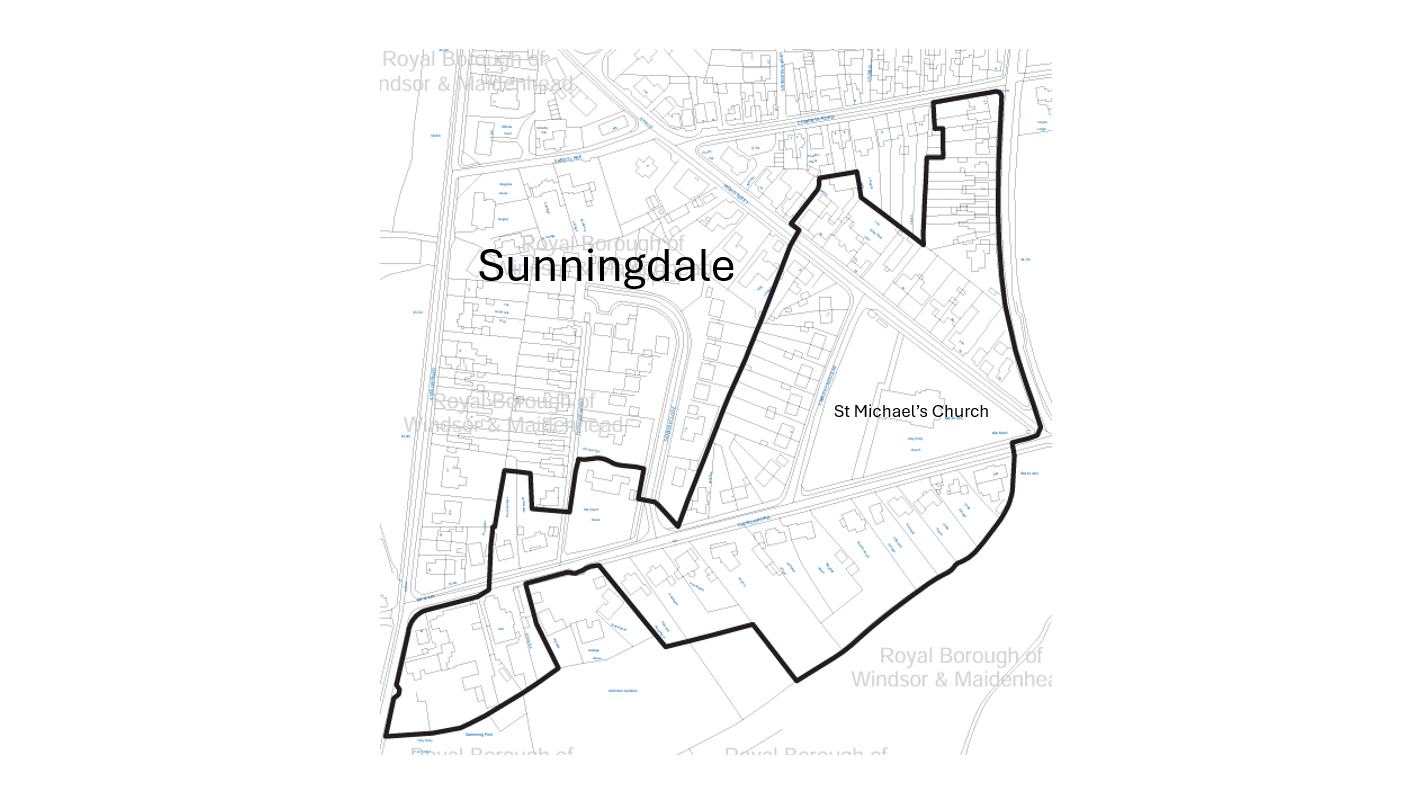
However, less than a month before these new permitted development regulations come into force, the Government has said that homes in Conservation Areas without driveways are excluded (The Times, 8th October). In the SPAE area, this applies to the roads surrounding St Michael’s Church, Sunningdale.
Historic England defines conservation areas as zones of “special architectural or historic interest”, where the aim is to preserve the character or appearance of an area.
The concern about EV charging is that allowing the installation of wall-mounted chargers on the external walls of buildings might impair the stonework, brickwork and woodwork of the built structure, thus harming the character in conservation areas.
The rules come into force on 21st October.
National Planning Policy Framework – GOV.UK – CC2: Mitigation of climate change para 2 (p.29)